Agentic AI Shopping Is Retail's Biggest 2026 Trend — Here's What It Means If You're Rebuilding Your Wardrobe
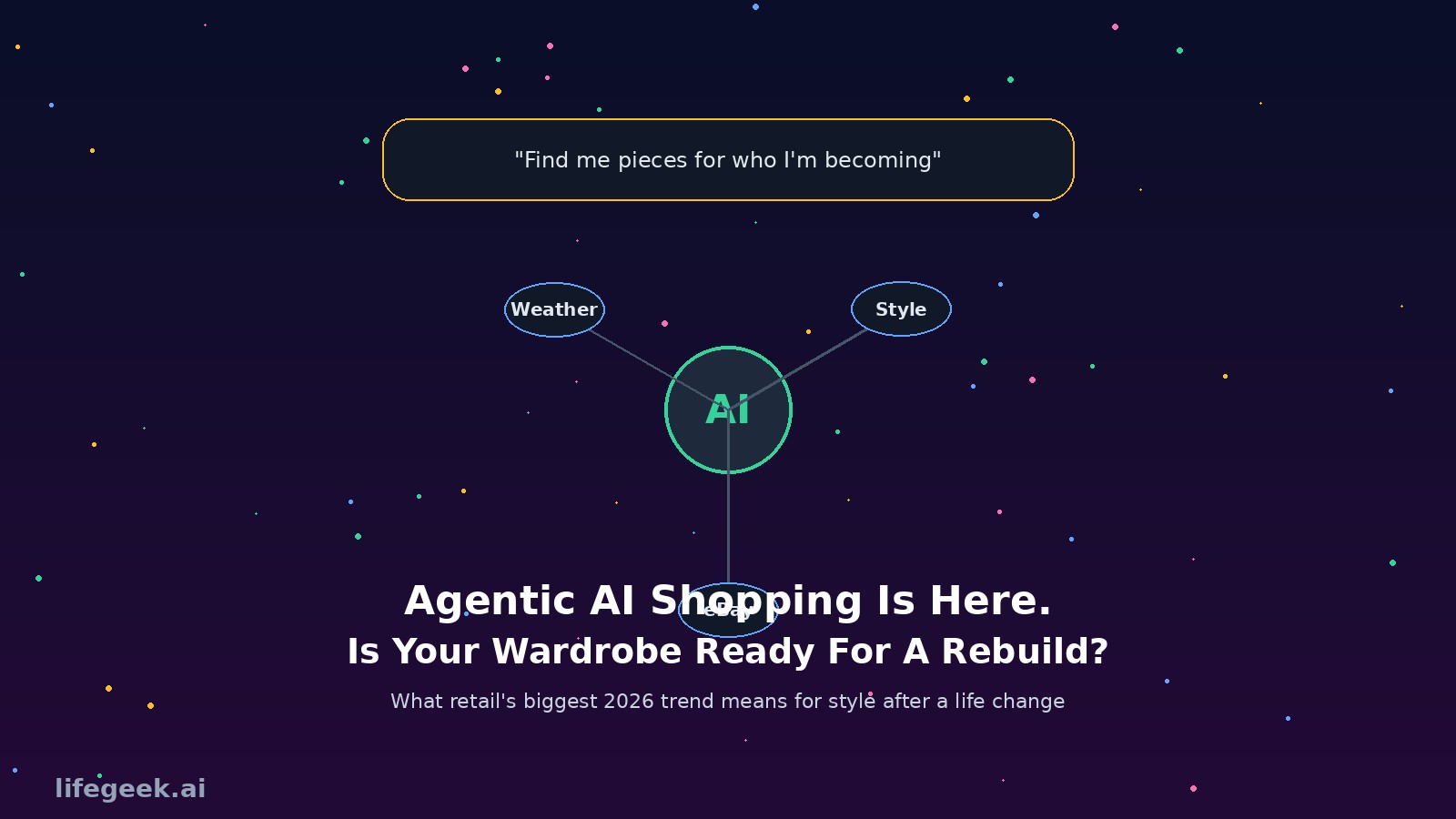
Quick answer: "Agentic AI shopping" means an AI assistant doesn't just answer questions about products — it actively searches live inventory, filters by your real constraints (budget, weather, occasion), and hands you buyable options in conversation. Major retail analysts named it a defining 2026 trend, and it matters most for people rebuilding a wardrobe from scratch, because the entire point is describing what you need in plain language instead of scrolling and filtering yourself.
Why 2026 is the year agentic AI shopping went mainstream
This isn't a niche prediction anymore — it's showing up across retail's biggest players and research firms in the same few months. Bain & Company wrote that "as agentic AI transforms retail economics, industry leaders will compete for shoppers and agents alike." McKinsey is telling luxury brands to prepare for AI interpreting and personalizing discovery on a shopper's behalf. AWS launched an Agentic Shopping Assistant for retailers to build their own version of what Alexa already does for Amazon. And in the UK, Frasers Group reported a 25% jump in conversions after rolling out its own AI shopping assistant.
The common thread: instead of a search bar and a wall of filters, you describe what you actually want, and the assistant does the filtering. PwC's Fashion Retail Outlook 2026 lists agentic commerce alongside traceability and supply chain resilience as one of the industry's defining shifts this year — not a future one.
What this actually changes for how people shop
Most of the coverage above is written for retailers wondering how to sell to AI agents. But the more useful question is what changes for the person on the other end of the conversation — especially someone who isn't just replacing one worn-out sweater, but rebuilding a wardrobe because their life looks different than it did a year ago.
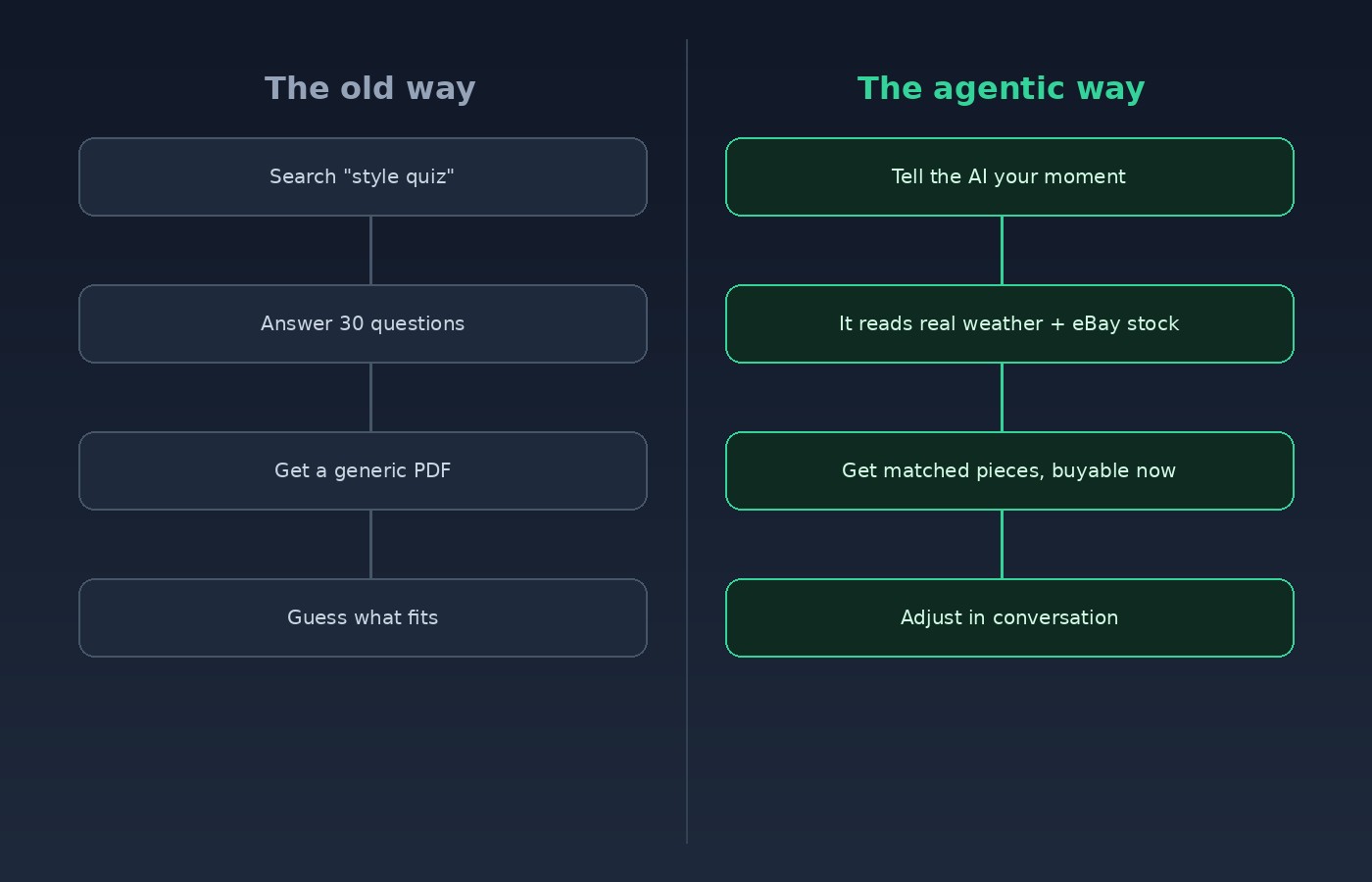
A style quiz or a closet app both start from the same assumption: you already roughly know what you're looking for, and the tool just narrows it down. Agentic AI shopping starts from a different assumption — that you can describe a situation in plain language ("I have a work trip that's colder than I'm used to dressing for" or "I need pieces that don't look like what I wore for the last twenty years") and the assistant does the searching, not just the sorting.
Why this matters more during a life transition than any other time
A career pivot, a divorce, an empty nest — these moments share a wardrobe problem that's different from ordinary shopping fatigue. The clothes in your closet were chosen by an earlier version of you, for a life that has since changed shape. You're not shopping to replace what you have. You're shopping without a clear reference point for what "you" looks like now.
That's exactly the situation agentic AI shopping is built for, because it doesn't require you to already know the answer. You don't need to know the brand, the exact silhouette, or even the right search terms — you need to be able to describe the moment, and let the assistant translate that into real, buyable options.
How LifeGeek applies this to real, buyable fashion
LifeGeek.ai is a chat-based AI stylist built on exactly this agentic model. Tell it about the trip, the job interview, the weather where you're headed, or simply that you're starting over and don't know where to begin — and it searches live eBay listings in real time, rather than returning a static quiz result or a list of items you have to click through one by one.
That combination matters for two reasons. First, live inventory changes constantly, so a fixed "capsule wardrobe" list goes stale fast — an agentic search that runs against current listings doesn't. Second, weather-aware styling means the assistant can factor in where you're actually going and when, not just a generic season, which is a differentiator most style-quiz tools and closet apps don't attempt at all.
Frequently asked questions
What is agentic AI shopping, in plain terms? It's an AI assistant that actively searches and filters real product listings based on a plain-language description of what you need, rather than just answering questions or narrowing down a quiz result.
Is agentic AI shopping only for big retailers? No — while Amazon, Frasers Group, and Pinterest have built agentic tools for their own catalogs, the same approach works for niche use cases like searching real-time marketplace listings for a specific life situation, which is where LifeGeek applies it.
How is this different from a style quiz? A style quiz narrows down pre-set categories based on your answers. Agentic AI shopping searches live inventory in response to an open-ended description, which matters most when you don't yet know how to categorize what you're looking for — a common situation during a major life change.
The takeaway
Agentic AI shopping stopped being a prediction in 2026 — Bain, McKinsey, AWS, and Frasers Group's own conversion numbers all point the same direction. For most retailers, that means building assistants that sell more of what they already stock. For someone rebuilding a wardrobe after a life change, it means something more useful: a way to describe a moment you don't have the right words for yet, and get real, buyable options back — which is the whole idea behind an AI stylist that searches live eBay listings instead of a static closet.
Sources: