The New-Job Wardrobe: How to Dress for a Career Pivot Without Buying a Whole New Closet
Quick answer: If you're switching careers, don't buy a whole new professional wardrobe before you have the job. Build a small, flexible "interview capsule" of 4-6 secondhand pieces that work across industries, then fill in the rest once you know your new employer's actual dress code. Zippia research shows 30% of U.S. workers aged 18-39, 21% of those in their 40s, and 12% of those 50 and older have considered a career change since the pandemic — which means a lot of people are quietly staring at a closet that no longer matches the job they're chasing, according to Zippia's career change statistics.
Career changes aren't rare anymore — but wardrobe advice hasn't caught up
Career pivots used to be treated like an exception. They're not anymore. Beyond the Zippia figures above, the average age for a career change in the U.S. is 39, and workers under 24 make roughly 3.8 more job changes over their working life than those over 45, per the same research. City University of Seattle's guide to career changes at 30, 40, or 50 puts it plainly: professional pivots have become common at every stage of working life, whether triggered by layoffs, burnout, or simply wanting something that fits who you are now.
What almost none of that career-change advice covers is the unglamorous logistics problem sitting in your closet: you need to look the part for interviews and a first 90 days in a field where you've never worked, and you need to do it before a single paycheck from the new job arrives.
The mistake: buying a full new professional wardrobe on spec
The instinct when pivoting careers is to treat it like a costume change — buy a stack of new blazers, new shoes, a whole new "look" for the person you're about to become. That's expensive, and it's premature. You don't actually know yet:
- What your new industry's real dress code looks like day to day (not what it looks like in stock photos)
- What your specific new office, client base, or manager expects
- Whether you'll be back in a building five days a week, hybrid, or mostly on video calls
Spending heavily before any of that is settled means you're as likely to buy the wrong wardrobe as the right one. Forbes' guide to using personal style as a career edge in 2026 makes a related point: the goal isn't a costume, it's a small set of well-chosen, versatile pieces — neutrals like navy, charcoal, cream, and a sharp blazer — that read as capable and put-together across almost any professional setting.
Build an interview capsule first, not a whole closet
Instead, build a small "interview capsule" designed to get you through the job search and first weeks, then expand once you know the real dress code:
- One structured blazer in navy, charcoal, or black — it instantly reads as intentional over almost anything underneath.
- Two tops that work equally under the blazer or on their own: one crisp button-down, one simple knit.
- One pair of well-fitted trousers and, if your budget allows, a second bottom in a different silhouette (skirt or dark denim, depending on the field).
- One pair of polished shoes that aren't sneakers but aren't uncomfortable enough to distract you in an interview.
- One weather-appropriate outer layer — a real coat if you're interviewing somewhere cold, because showing up underdressed for the climate reads as unprepared, not stylish.
That's it. Five or six pieces, mixed and rematched, get you through weeks of interviews and a first month on the job while you actually observe what your new colleagues wear.
Why secondhand makes more sense here than new retail
Buying this capsule secondhand isn't just cheaper — it's arguably the smarter financial move right now. On a recent Marketplace segment about the resale boom, newsletter writer Karina Cohen described a real shift in how shoppers think about purchases: more people are buying secondhand with future resale value in mind, not just lower upfront cost. Demand for vintage on The RealReal is up more than 400% since 2020, and ThredUp projects the global resale market will reach $400 billion by 2030, per the same report.
That matters for a career-pivot wardrobe specifically: if the blazer or shoes you buy for interviews don't end up matching your new job's actual dress code, secondhand pieces bought well hold more resale value than fast-fashion basics — so testing your way into a new professional look costs you less if you guess wrong, and costs you almost nothing extra if you guess right and keep wearing them.
Where AI fashion discovery fits in
The hard part of secondhand shopping for a specific, time-sensitive need is search. Marketplaces like eBay have enormous inventory, but typing "navy blazer" into a search bar doesn't know that you need it to look credible in finance, not tech; that you're a size that runs differently across decades of brands; or that you're interviewing somewhere colder than where you live now.
That's the exact gap a chat-first AI stylist is built to close. Instead of guessing search terms, you describe the actual moment: "I'm interviewing for a career change into healthcare admin, need something professional but not stiff, budget under $80, and it'll be cold where I'm interviewing." An AI that searches live marketplace listings for intent — not keywords — can surface real, in-stock secondhand pieces that match tone, budget, and weather all at once, instead of sending you back to scroll through hundreds of irrelevant listings yourself.
Frequently asked questions
How many outfits do I actually need for a career-change job search? Four to six well-chosen, mix-and-match pieces are enough to build several different interview outfits. Wait until you've started the new job and observed real dress norms before expanding further.
Is it worth buying secondhand for interview clothes specifically? Yes. Secondhand pieces are typically 50-90% cheaper than new retail, and current resale-market data shows well-chosen secondhand items — especially recognizable, well-made pieces — can hold real resale value if they don't end up matching your new role's dress code.
Does this only apply to people in their 40s and 50s? No. Zippia's data shows 30% of workers aged 18-39 have also considered a career change since the pandemic — more than any other age group. The interview-capsule approach works at any age; it just tends to carry more financial weight for people in their 40s and 50s who are also managing other life-change costs at the same time.
What if my new industry's dress code turns out to be totally different from what I bought? That's exactly why the capsule approach and secondhand shopping matter together: you're not stuck with an expensive, wrong wardrobe. Resell the pieces that don't fit the culture and shop again with what you've learned.
Try it before your next interview
If you're staring at a closet that doesn't match the career you're moving into, you don't need to buy your way into a whole new identity before you've even started. Try LifeGeek's AI fashion chat and describe the interview, the industry, your budget, and the weather — it searches live eBay listings for pieces that actually match, so you can walk in looking like you already belong there.
Career-change wardrobe, by the numbers
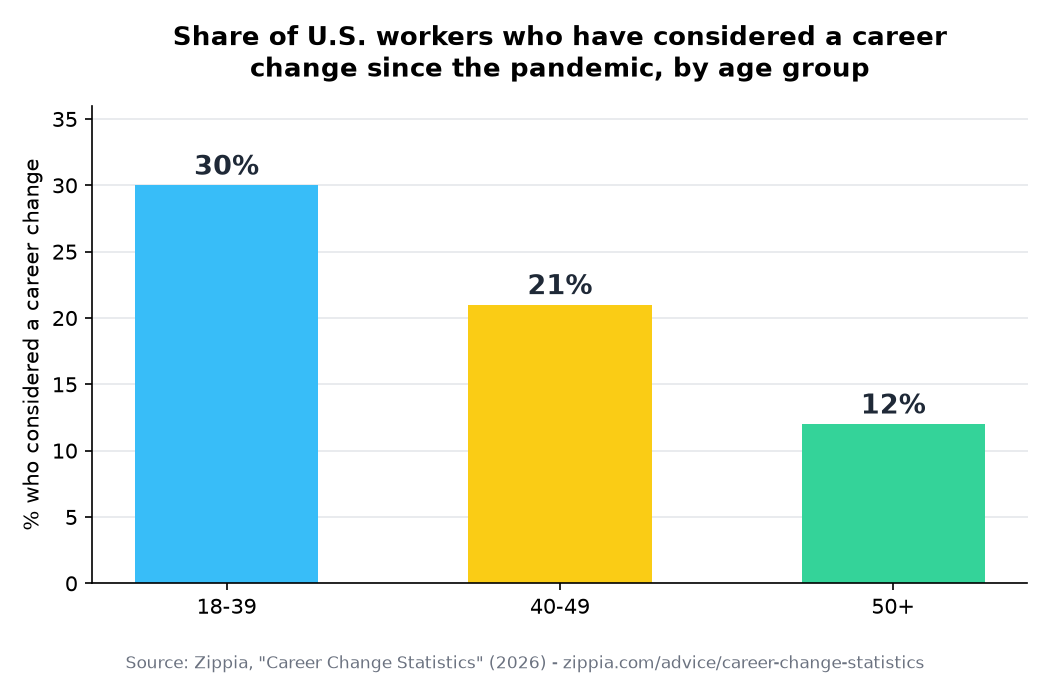
Source: Zippia, "Career Change Statistics" (2026)